“`html
How to Propagate Orchids
Orchids are a favorite among gardeners due to their breathtaking beauty and exotic allure. However, propagating these sophisticated plants can seem daunting to the novice gardener. This comprehensive guide offers a deep dive into various propagation methods that cater to different types of orchids. From dividing pseudobulbs to encouraging keikis, growing from cuttings to propagating from seeds, we’re here to help you expand your orchid collection. Whether you’re a hobbyist or a seasoned gardener, these techniques will equip you with the skills to propagate orchids successfully, ensuring your floral collection continues to thrive and flourish.
Gardening tips, videos, info and more delivered right to your inbox!
Staying informed about the latest gardening trends and techniques can significantly enhance your green thumb. By subscribing to newsletters or online gardening platforms, you can receive up-to-date tips, expert videos, and valuable information right in your inbox. These resources often offer seasonal gardening advice, plant care tips, and insights into emerging plant varieties.
Engaging with gardening communities through these platforms allows you to share experiences, troubleshoot common issues, and exchange tips with fellow plant enthusiasts around the globe. Sign up today to transform your gardening experience and ensure your orchids—and all your plants—continue to bloom beautifully year after year.
1. Divide Pseudobulbs
Dividing pseudobulbs is a common method of propagating orchids, particularly in sympodial types such as Cattleya and Dendrobium. Each pseudobulb contains the necessary tissues to grow a new plant. To begin, carefully remove the orchid from its pot, gently shaking off excess soil or growing medium. Look for clusters of pseudobulbs that can be separated without damage to the plant as a whole.
Using a sterilized knife or shears, separate a cluster of pseudobulbs, ensuring each division has at least three bulbs. This gives the new plant a strong foundation for growth. After separation, pot each division in a fresh orchid mix, positioning them so that the new growth points upwards. Water lightly until you observe new growth, signaling successful propagation.
2. Encourage Keikis
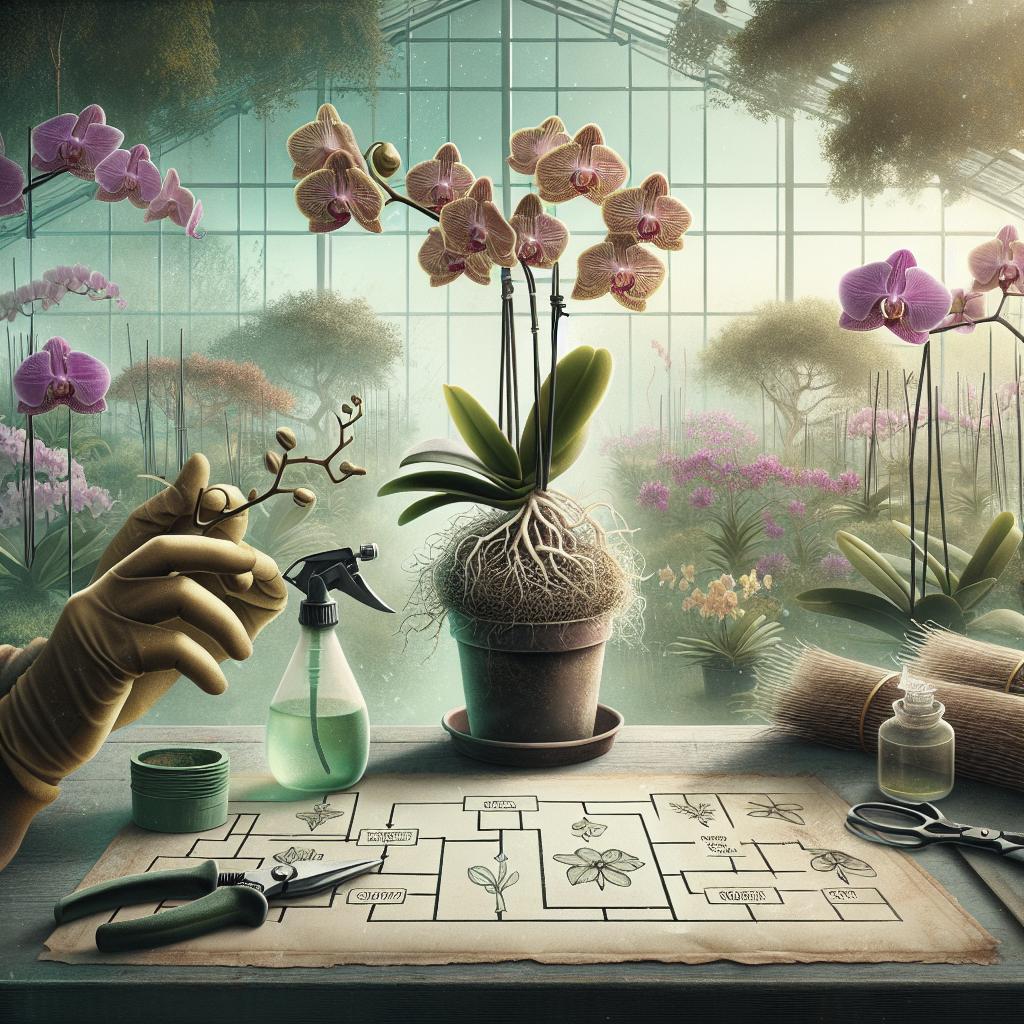
Keikis, or “babies” in Hawaiian, are small plantlets that some orchids, notably Phalaenopsis and Dendrobium, produce on their flower spikes or stems. To encourage keiki growth, closely monitor your orchid and provide optimal care conditions, including proper light, humidity, and temperature. Sometimes, stress can induce keiki formation, so ensure your orchid is consistently cared for without drastic environmental changes.
Once a keiki forms, it will eventually develop roots and leaves. Allow these to grow for several months until the roots are at least a few inches long. Carefully cut the keiki from the mother plant, taking care not to damage the delicate roots, and replant it in a small pot using fresh orchid mix. With time and care, your keiki will mature into a stunning orchid, replicating its parent’s beauty.
3. Grow Orchids From Cuttings
Another simpler method to propagate orchids is through cuttings, often viable with orchids like Dendrobium. Begin by selecting a healthy orchid cane or stem and using sterilized scissors, cut a 4- to 6-inch section. Ensure these sections have multiple nodes, as roots and shoots will emerge from them.
Place these cuttings, horizontally on a moist growing medium such as sphagnum moss, partially burying them to secure in place. Maintain humidity and warmth, and after several weeks, you should see new growth emerging from the nodes. Once the new growth produces sufficient roots and leaves, you can carefully transplant these plantlets into a more permanent pot. This method can be highly rewarding, as it directly reflects successful propagation and care.
4. Propagate Orchids From Seed
Propagating orchids from seeds is undoubtedly the most challenging and time-consuming method. Orchid seeds are microscopic and lack nutrient stores, requiring a sterile growing environment and nutrient-rich substance, often agar, for germination. Conducting this method at home requires precision and patience, as well as specific equipment to maintain a sterile setting.
Begin by obtaining orchid seeds and preparing a nutrient agar medium. Sow the seeds on the medium in a clean, sterile container, ensuring they remain undisturbed. After germination, a process that can take months, seedlings will appear. Gradually acclimate them to less sterile conditions, gradually increasing light and air flow. Though this process can span years before flowering, successfully growing orchids from seeds is immensely rewarding, offering insights into the intricate life cycle of these stunning plants.
Which Type Of Orchid?
The method of propagation you choose largely depends on the type of orchid you have. Sympodial orchids, such as Cattleya and Oncidium, with their characteristic pseudobulbs, are most suitable for division. Monopodial orchids, like Vanda and Phalaenopsis, which grow from a single stem, are best propagated through keikis or cuttings.
It’s essential to have some basic understandings of your orchid’s growth patterns and natural habitat to decide the most suitable propagation method. Knowing your orchid type doesn’t only help in choosing a propagation technique but also ensures you provide the optimal care, encouraging healthy growth and flowering.
Final thoughts
| Propagation Method | Description | Best For |
|---|---|---|
| Divide Pseudobulbs | Separate clusters of pseudobulbs to create new plants. | Sympodial Orchids (e.g., Cattleya, Dendrobium) |
| Encourage Keikis | Foster mini orchids from existing plant spikes or stems. | Phalaenopsis, Dendrobium |
| Grow from Cuttings | Use sections of orchid canes or stems to grow new plants. | Orchids with visible stems like Dendrobium |
| Propagate From Seed | Grow orchids from seed in a sterile and nutrient-rich environment. | Typically not plant-specific, requires patient and precision |
Exploring different propagation methods can not only expand your orchid collection but also deepen your understanding and appreciation of these magnificent plants. Practice and patience play crucial roles in successful propagation, and the more you work with your orchids, the better you’ll become at knowing their needs and behaviors. Whether you choose to propagate via seeds, cuttings, keikis, or pseudobulbs, these techniques ensure that you’ll enjoy the splendor of orchids for years to come.
“`