“`html
The Basics of Aquaponics Gardening
Welcome to an exploration of aquaponics gardening, a revolutionary method integrating aquaculture and hydroponics to create a symbiotic growing environment. This article will guide you through the fundamentals of aquaponics, including what it is, how it functions step by step, and the reasons why it may be a sustainable and efficient way to grow food. We will also delve into various aquaponics system designs to help you choose the best one for your needs, and provide a simple DIY guide to set up your system at home. The future prospects section will summarize these points and present the long-term potential of aquaponics gardening. Let’s dive into the world of aquaponics to uncover how you can cultivate your garden in a smarter, eco-friendly way.
What is Aquaponics?
Aquaponics is an innovative gardening technique that combines aquaculture, the practice of raising fish, with hydroponics, the cultivation of plants in water without soil. This agricultural method sets up a closed loop ecosystem where fish waste supplies necessary nutrients for plant growth, and plants naturally filter and purify the water the fish live in. Aquaponics is celebrated for its sustainability due to minimal water usage, lack of chemical fertilizers, and ability to produce fish and vegetables with a small environmental footprint.
Historically, aquaponics traces its roots to ancient practices used by the Aztecs and in Asian wetland farming. These age-old methods were based on synergy between aquatic life and plant cultivation. Modern aquaponics have harnessed these principles to develop efficient and productive systems that can be employed on a small window sill, a backyard, or even on a commercial scale, making it accessible to a diverse range of gardeners and farmers alike.
How Does Aquaponics Work Step by Step?
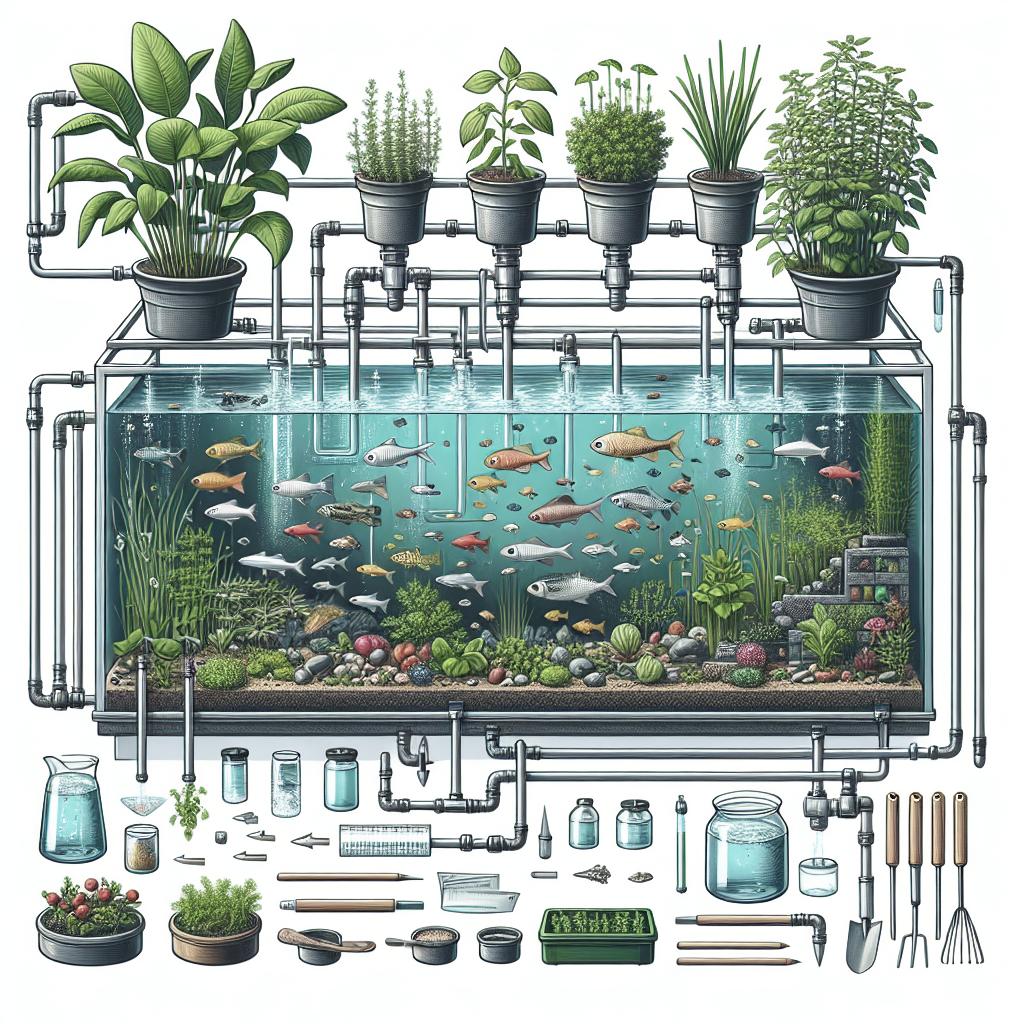
The process of aquaponics begins with raising fish in a tank where they produce waste containing ammonia. Initially, this waste is harmful to fish but essential to the system. The waste-laden water is pumped from the fish tank to a biofilter where beneficial bacteria convert ammonia into nitrites and then nitrates. This conversion plays a pivotal role, turning what everyone thought to be waste into a vital resource.
Once the nitrates are produced, nutrient-rich water is channeled to plant beds. Here, plants absorb these nutrients through their root systems, effectively cleaning the water. Purified water is then recirculated back to the fish tank, completing the cycle. This system, therefore, not only nurtures plant life but also ensures a healthy, living environment for the aquatic organisms involved.
Why Grow Food This Way?
The primary advantage of aquaponics is sustainability. It uses about 90% less water than traditional farming as the same water continuously circulates throughout the system. Aquaponics systems don’t require soil, thus eliminating the need for pesticides and reducing land degradation. Consequently, it provides a chemical-free alternative for growing organic produce.
Aquaponics systems are known for their high productivity rates. Plants grow faster in nutrient-rich water, usually yielding a quicker harvest. This system also allows for dual income from fish and plants. Moreover, it’s a versatile system that can be installed in spaces as small as a balcony or as sizable as a greenhouse, making it a practical choice for urban and rural growers aiming to maximize space efficiency.
Aquaponics Design: Which System is Best?
There are several aquaponics designs to consider, with each model offering unique benefits. The simplest is the media-filled bed system, which uses a grow bed filled with growing medium to support plant roots and act as a biofilter. It is ideal for beginners due to its straightforward implementation and maintenance, and its design is well-suited for a variety of plants.
Nutrient Film Technique (NFT) is another type, which involves passing nutrient-rich water through narrow channels where plant roots absorb nutrients. This method is perfect for leafy greens and smaller plants, though it requires meticulous water flow control. Lastly, the Deep Water Culture (DWC) or raft system sustains plants on rafts floating on water rich with fish waste. This system is suitable for large-scale commercial operations and is effective for quick-growing plants.
DIY Aquaponics in Five Easy Steps
Creating your own aquaponics system at home is a rewarding project. Begin by selecting a location with adequate sunlight and moderate temperatures, ensuring enough space for your fish tank and grow beds. Next, choose fish like tilapia or goldfish suitable for your climate, and select a diverse array of plants, such as herbs and lettuce, to give your aquaponics garden variety.
The third step involves setting up the fish tank and the grow bed, connecting them with a pump to facilitate water movement. Install a biofilter between these components to ensure efficient ammonia conversion. Lastly, cycle the system by adding fish and plants, allowing time for bacterial colonies to establish and making sure to monitor the water quality regularly. Your aquatic garden is now ready to flourish!
About the Author
Lucas Martin is a passionate journalist and communications expert with a keen interest in innovative gardening techniques like aquaponics. Drawing from his experience in local media and blog projects, Lucas expertly crafts dynamic, engaging content. When not writing, he’s likely exploring new travel destinations, diving into cutting-edge tech, or experimenting with sustainable living practices. Lucas aspires to work with tech-focused companies and is constantly engaging with new market trends and honing his SEO skills.
Future Prospects
| Topic | Summary |
|---|---|
| What is Aquaponics? | Aquaponics is a sustainable blend of aquaculture and hydroponics using fish waste to nourish plants, which in turn filter the water. |
| How Does Aquaponics Work? | Aquaponics involves a cycle where fish produce ammonia, bacteria convert it to nitrates, plants absorb the nutrients, and clean water returns to the fish tank. |
| Why Grow Food This Way? | Offers sustainability, reduces water use, eliminates soil, and produces dual yields of fish and plants, suitable for varied spaces. |
| Aquaponics Design | Media-filled beds, NFT, and DWC systems each offer distinct benefits, allowing customization based on space and plant type. |
| DIY Aquaponics | Encourage at-home systems with step-by-step guidance on location, setup, and maintenance for a thriving aquaponics garden. |
“`