“`html
How to Prune Fruit Trees for Better Yield
Introduction
Pruning fruit trees is a vital practice for any gardener aiming to enhance the yield and health of their trees. Understanding the principles and techniques of pruning can make a significant difference in fruit production and the overall vigor of your orchard. This blog post delves into the fundamental aspects of pruning, including the impact it has on various types of trees, the best times and methods for pruning, and the significance of proper cuts. Whether you’re looking to start pruning your young nonbearing trees or seeking advanced tips for mature trees, this guide offers insights and steps to ensure your fruit trees flourish season after season.
Principles
Pruning Dwarf Trees
Dwarf fruit trees, due to their smaller size, require specialized pruning techniques to ensure they remain productive. Pruning helps maintain their shape, manage size, and ensure sunlight penetration, which is essential for fruiting. Approaching dwarf tree pruning with a focus on thinning and shortening branches enhances light distribution and air circulation.
While pruning dwarfs, concentrate on removing any branches that crowd the center, aiming to keep the tree open. It’s crucial to cut back to outward-facing buds or branches to promote a balanced structure. Remember, the goal is not just to control size but to foster a productive and healthy tree.
Pruning Appears to Invigorate Trees
Pruning is more than just a maintenance task; it stimulates growth and can invigorate trees. When strategically done, it encourages the development of new shoots and branches, leading to improved vigor and productivity. Selective removal of branches reduces competition for resources, enabling the tree to redirect its energy effectively.
An invigorated tree, post-pruning, often exhibits increased flowering and fruiting potential. However, it’s essential to tailor pruning to the needs of your specific tree variety and climate conditions to maximize this invigoration effect.
Pruning Effect is Localized
The impact of pruning is primarily localized to the area around the cuts. This means that targeted pruning can influence specific sections of the tree, creating an opportunity to shape growth and enhance productivity in particular zones. It allows gardeners to exercise greater control over the tree’s form and the distribution of fruiting wood.
Recognizing the localized nature of pruning effects, gardeners can strategically encourage fruit production in areas that best capture sunlight and are less susceptible to damage from pests or diseases.
Pruning Too Heavily has Several Ill Effects
While pruning is beneficial, excessive pruning can have adverse effects. Over-pruning can lead to undue stress on trees, weakening their structure and making them susceptible to disease. It can trigger a response from the tree that focuses on developing excess vegetative growth rather than fruit production.
Heavy pruning may also delay fruit bearing and increase vulnerability to environmental factors such as frost. Moderation is key when pruning; it’s admirable to understand the desired outcome and prune accordingly, avoiding drastic removal of branches.
Pruning the Young Tree Delays Fruit Bearing
Although pruning is crucial for shaping young trees and fostering strong frameworks, excessive pruning at this stage can delay fruit bearing. Young trees concentrate on establishing their root systems and initial growth, and excessive cutting can redirect their energy away from these endeavors.
An approach of minimal, strategic pruning encourages steady, healthy growth. Prioritize structural integrity, removing damaged or crossing branches, without deterring potential early fruiting.
Clean, Flush Cuts Heal More Quickly
Precision is vital when pruning, as clean, flush cuts heal faster and reduce the risk of disease and pest infestation. A clean cut minimizes the wound area, facilitating rapid healing and reducing the tree’s vulnerability.
Utilizing sharp, well-maintained tools for pruning ensures clean cuts. When making cuts, aim to create smooth edges without jagged surfaces, aiding in efficient wound closure and maintaining tree health.
Narrowed-Angled Crotches are Weak
Narrow-angled crotches, or the junctions where branches connect with the trunk, are susceptible to splitting and damage. These weak points can lead to structural vulnerabilities, especially when bearing fruit or under weather stress.
Pruning to remove branches forming narrow angles with the trunk encourages stronger, wider-angled crotches. This practice lends to a more resilient tree structure, capable of supporting healthier, more abundant fruit loads.
Pruning and Training at Planting Time
The process of pruning begins at planting time, setting the foundation for a tree’s future growth and productivity. Initial pruning involves shaping the tree for balanced development, removing damaged roots and branches, and establishing the primary structure.
Training young trees during planting not only promotes a robust form but also facilitates easier management in later years. As the tree grows, continual adjustments ensure its steady development into a productive specimen.
Training the Young Nonbearing Tree
Training young nonbearing trees emphasizes developing a solid framework. The goal is to establish a strong central leader and well-spaced lateral branches, creating a structure that will support future fruiting.
During the first few years, pruning to guide shape should be minimal and strategic. Focus on removing competing leaders and any wayward branches that could disrupt the eventual architecture.
Pruning the Mature Fruit Tree
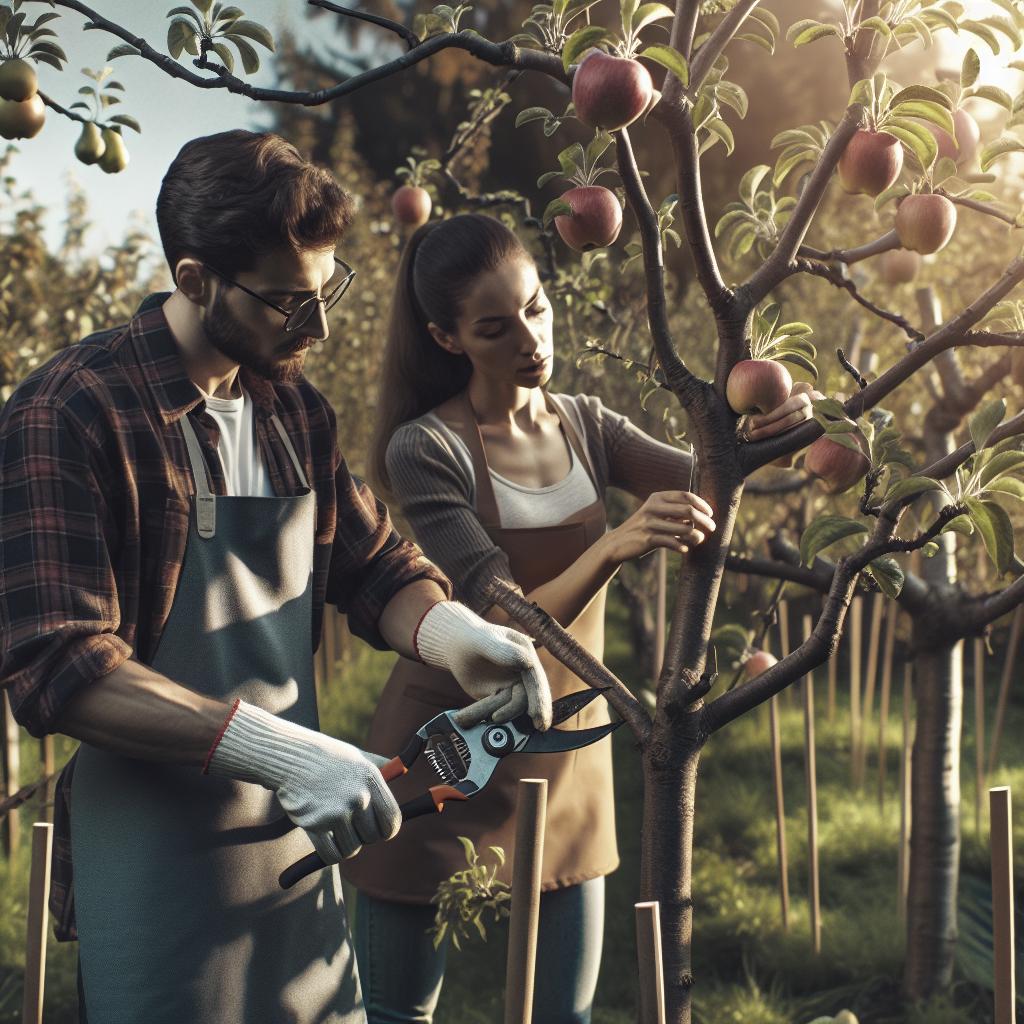
Mature fruit trees benefit from regular pruning to control size, remove deadwood, and enhance fruit production. At this stage, pruning aims to balance vegetative growth with productive effort.
Regular assessment of tree health can guide pruning decisions, ensuring that each cut made will contribute to a more vigorous, fruitful tree.
Dormant Pruning
Dormant pruning, carried out in late winter, is essential for shaping mature trees and stimulating growth in desired areas. This practice involves removing dead or diseased branches and thinning overcrowded areas to allow for light penetration.
Pruning during dormancy reduces sap loss and shock, enabling the tree to recover quickly. A thoughtful approach to dormant pruning can set the stage for a productive season.
Pruning During Bloom
Pruning during bloom is controversial but can benefit certain fruit trees, such as apples, by improving air circulation and allowing sunlight to penetrate. This practice helps in managing fruit load and quality by selectively removing excess or weak blooms.
Timing and precision are critical when pruning during bloom to prevent stress on the tree while fostering the growth of desirable fruit clusters.
Early Summer Pruning
Early summer pruning is used to control size and manage the immediate aftermath of vigorous spring growth. This period is ideal for removing water sprouts and suckers, which do not contribute to fruiting.
By controlling unnecessary growth, summer pruning directs the tree’s resources toward developing quality fruit and maintaining a manageable structure through the growing season.
Midsummer Pruning
Midsummer pruning focuses on maintaining air circulation and sunlight exposure, addressing any overcrowding issues that have arisen since the early summer. This practice can help prevent disease and improve fruit quality and size.
Moderation is crucial in midsummer pruning, as excessive cutting can lead to sunscald and inhibit fruit development. Thoughtful adjustments can support tree health and productivity through the heat of summer.
Fall Pruning
Unlike other pruning times, fall pruning is approached with caution. This period involves minimal adjustments, primarily focusing on removing dead or damaged branches to prepare the tree for winter.
Significant pruning is generally avoided in the fall to prevent stimulating new growth that will not harden off before cold weather, leaving the tree vulnerable during winter months.
Summary of Rules for Pruning Bearing Trees
Understanding the nuances of pruning and applying them thoughtfully can significantly impact the health and yield of fruit trees. Continuously adapting techniques based on tree age, type, and seasonal conditions ensures healthier, more abundant fruit production year after year.
Next Steps
| Pruning Stage | Description |
|---|---|
| Dwarf Trees | Focuses on shape, size, and light penetration through thinning and shortening branches. |
| Invigorate Trees | Encourages new growth and productivity by reducing resource competition. |
| Localized Effect | Directs growth in specific areas for better light access and fruit quality. |
| Heavy Pruning Effects | Leads to stress, weakens structure, and prioritizes vegetative growth over fruit production. |
| Young Tree Pruning | Shape establishment with minimal removal to aid root growth and avoid delaying fruit bearing. |
| Clean Cuts | Facilitates rapid healing and reduces disease or pest entry. |
| Narrow Crotches | Targets removal for structural integrity, minimizing weak points. |
| Dormant Pruning | Late winter practice that thins and shapes, encouraging healthy growth. |
| Pruning During Bloom | Selective removal benefits air flow and fruit quality in blooming period. |
| Summer and Midsummer Pruning | Focus on size control, sucker removal, maintaining airflow, and sunlight for optimal fruit growth. |
| Fall Pruning | Minimal cutting to prepare for winter, avoiding new growth stimulation. |
“`