“`html
Tips for Growing Onions
Onions are a staple in kitchens around the world, revered for their distinctive taste and the depth they bring to countless dishes. However, growing onions successfully requires more than just planting a few seeds and hoping for the best. This blog post will guide you through some essential tips and techniques to cultivate healthy onions at home. From selecting the right soil, understanding the planting process, and ensuring appropriate care, to troubleshooting common issues and effectively harvesting and storing your produce, this article covers it all. For those eager to delve into the prospects of starting an onion patch, each phase of the onion-growing journey is detailed here. Whether you’re a seasoned gardener or a novice with a green thumb, these insights are crafted to help you maximize your onion yield.
Quick Guide to Growing Onions
Growing onions begins with understanding their basic needs, which include adequate sunlight, well-drained soil, and careful watering. Onions require full sun, meaning they should receive at least 6-8 hours of sunlight daily. They also thrive in soil with a pH between 6.0 and 7.0, which ensures that nutrients are available for the onions to thrive.
Onions come in various types, including red, yellow, and white, each with specific taste profiles and growth requirements. Selecting the right variety for your climate and culinary preferences is crucial. It’s advisable to consult regional planting guides or local gardening centers to choose the most suitable type for your area.
Whether you start from seeds, sets, or transplants can influence your success rate. Seeds offer a broader range of varieties, while sets and transplants offer a head start. Consider your local climate and the growing season length when choosing how to start your onion crop.
Soil, Planting, and Care
Preparing the soil is a critical first step. Onions prefer loose, fertile soil rich in organic matter. Before planting, work compost or well-rotted manure into the soil to boost its fertility. This not only improves drainage but also provides essential nutrients that onions need to thrive.
Planting onions at the right depth and spacing is equally important for optimal growth. Typically, onion seeds should be sown about ¼ inch deep and spaced roughly 4-6 inches apart. For sets and transplants, ensure they are planted with the bulb shoulders just below the soil surface.
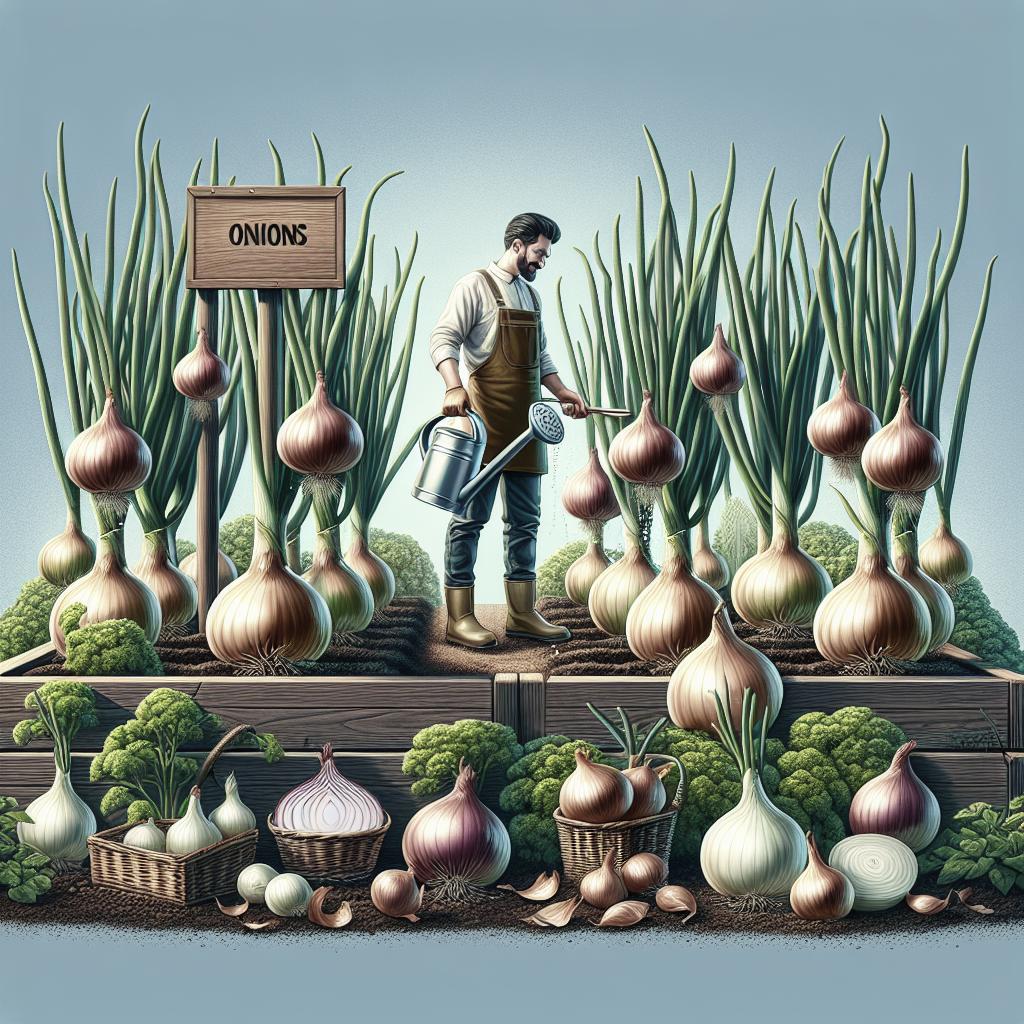
Onions are shallow-rooted and thus require consistent watering, especially during dry spells. However, be cautious not to overwater, as excessive moisture can lead to rot. A steady watering schedule, along with mulching, can be beneficial in retaining soil moisture and suppressing weeds that could compete with the growing onions.
Troubleshooting
Onion growing is not without its challenges. Pests such as onion maggots and thrips can wreak havoc on your crop. Implementing crop rotation, using floating row covers, and applying organic insecticides can help mitigate these issues.
Diseases like bulb rot and downy mildew are also concerns. Ensuring proper spacing and air circulation can reduce susceptibility to these diseases. It’s essential to remove and destroy any infected plants immediately to prevent the spread to healthy onions.
If your onions are not bulbing, it could be a sign of insufficient daylight exposure. Onions are day-length sensitive, and planting them too late in the season can affect bulb formation. Additionally, feeding them the right nutrients throughout the growth cycle is important for ensuring hearty bulbs.
Harvest and Storage
Knowing when to harvest your onions can greatly affect their storage life. Once the tops turn yellow and start to fall over naturally, it’s time to stop watering and allow them to dry out. This usually indicates that the onion has matured and is ready for harvest.
After pulling onions from the ground, dry them in a sunny, well-ventilated area for several weeks. This curing process helps the outer layers to develop protective dry skins, which enhance their shelf life and reduces the risks of spoilage during storage.
Proper storage is crucial. Store the cured onions in a cool, dry place, ideally at temperatures between 32°F and 40°F, with low humidity. Hanging them in mesh bags or spreading them on ventilated shelves can extend their freshness, allowing your onion supply to last well into the months ahead.
Future Prospects
| Aspect | Details |
|---|---|
| Sunlight | Requires 6-8 hours daily |
| Soil pH | 6.0 to 7.0 |
| Planting Options | Seeds, Sets, Transplants |
| Watering Needs | Consistent; avoid overwatering |
| Pest Control | Use row covers, organic insecticides |
| Harvesting Sign | Tops turn yellow and fall over |
| Storage | Cool, dry place; 32°F – 40°F |
“`