“`html
How to Prepare Garden Beds for Planting
Creating the perfect garden bed is an essential step for any successful gardener. A well-prepared garden bed can significantly improve your plants’ growth, leading to a vibrant and productive garden. This article will guide you through critical steps such as planning and marking out your garden bed, removing any existing vegetation, and loosening and amending the soil to create an ideal environment for your plants. Furthermore, we’ll discuss the importance of an efficient watering system and how mulching can help maintain a weed-free garden. By the end of this post, you’ll be better equipped to transform your blank patch of dirt into a thriving bed ready for planting.
Plan and Mark Out the Bed
Before you start digging, it’s essential to have a clear plan for your garden bed. This involves selecting a suitable location that receives adequate sunlight and is shielded from strong winds. Measure the area you intend to use for planting and decide on the size and shape of your beds. It’s a good idea to consider accessibility—ensure that you can comfortably reach all areas of the bed for planting, maintenance, and harvesting.
Once you have a plan, use stakes and string to mark out the boundaries of your garden bed. This visual aid helps keep your bed symmetrical and organized. Also, consider the spacing requirements for the plants you want to grow. By planning in advance, you can avoid overcrowding and create a more efficient garden layout.
Remove the Vegetation
With your garden bed marked out, the next step is to clear away existing vegetation. This could include weeds, grass, or any unwanted plants. It’s crucial to eradicate any perennial weeds as they can quickly overtake your garden, hindering plant growth and productivity. You may use a spade or hoe to remove surface vegetation, ensuring you get the roots as well.
If you’re dealing with a particularly stubborn patch of weeds, consider using a natural herbicide or covering the area with black plastic to block sunlight and kill off unwanted growth before tilling. Taking care of weeds now will save you a significant amount of time and effort in the future, allowing your plants to thrive without competition for nutrients and water.
Loosen the Soil
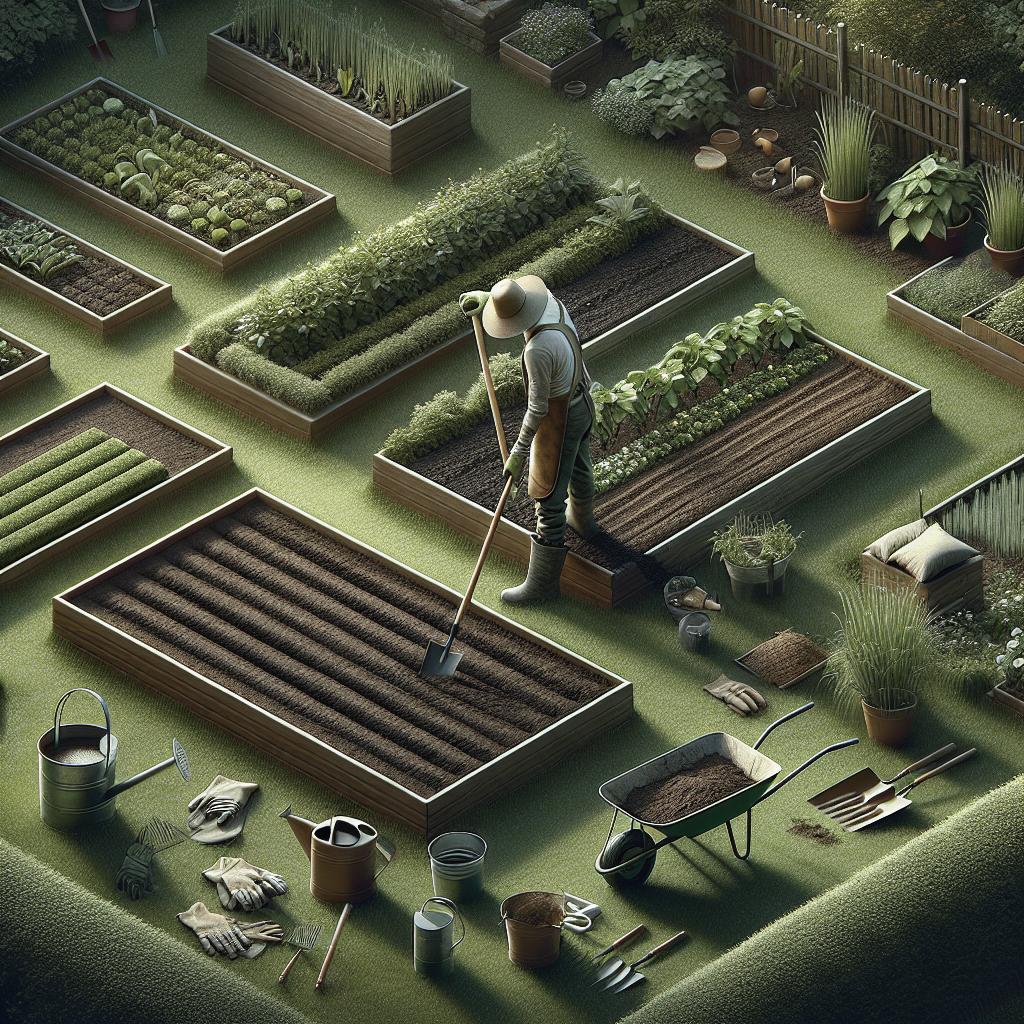
Next, you’ll want to focus on the soil’s structure. Loosening the soil is necessary to improve aeration and root penetration, as compacted soil can lead to poor drainage and stunted plant growth. Use a garden fork or a tiller to break up the top 12 inches of soil. This will also help mix in any organic matter that is present, enriching the soil further.
As you work, remove any rocks or debris that may obstruct root growth. Loosening the soil also helps to reduce soil compaction caused by foot traffic or rain, which can impede root development. Oxygen-rich, loose soil encourages a robust root system, key to sustaining healthy plants.
Amend the Soil
Now that your soil is loose, it’s time to amend it by adding nutrients essential for plant growth. Incorporating compost or well-rotted manure can significantly enhance the soil’s fertility, providing a balanced nutrient profile. Spread a few inches of organic matter over the bed and mix it thoroughly into the top layers of soil to allow nutrients to reach plant roots effectively.
If you’re dealing with poor or sandy soil, additional amendments like peat moss or vermiculite can improve water retention and soil texture. Conducting a soil test might be beneficial to understand pH levels and any specific nutrient deficiencies. Adjust your amendments accordingly to tailor-make the ideal growing environment for your chosen plants.
Set Up Your Watering System
With your garden bed almost ready, don’t forget about an efficient watering system. Consistent moisture is vital for healthy plant development, and setting up a methodical system will save you time and effort in the long run. Consider installing a drip irrigation system or soaker hoses, which deliver water directly to the plant’s base, minimizing evaporation and keeping foliage dry to prevent disease.
If you prefer a more manual approach, ensure you have easy access to a hose and watering tools. Whichever method you choose, make it sustainable for your watering needs, considering local climate and the plants’ moisture requirements. An automated system could also be useful, particularly during prolonged dry spells.
Mulching and Keeping Beds Weed Free
Mulching is an effective method to suppress weeds, retain soil moisture, and maintain consistent soil temperatures. After planting, apply a layer of organic mulch material like straw, grass clippings, or chipped bark around your plants. This not only inhibits weed growth but also gradually decomposes, adding nutrients back into the soil.
Regular monitoring and weeding are essential for maintaining a weed-free garden bed. Take the time to remove weeds as they appear, using tools to pull them out by the root. Consistent weeding combined with mulching can significantly reduce the effort needed to maintain a healthy garden ecosystem.
Questions? Contact:
If you have any questions or need further assistance with preparing your garden beds, feel free to reach out. Contact us at info@yourgardenwebsite.com or visit our website for more gardening tips and resources.
Lessons Learned
| Step | Key Points |
|---|---|
| Plan and Mark Out the Bed | Choose an ideal location, measure and mark boundaries, ensure accessibility. |
| Remove the Vegetation | Clear existing plants, focus on eliminating perennial weeds. |
| Loosen the Soil | Improve aeration with tilling, remove obstructions, enhance root growth. |
| Amend the Soil | Add compost or manure, adjust nutrients based on soil test, ensure optimal conditions. |
| Set Up Your Watering System | Install efficient systems like drip irrigation, consider plant needs and local climate. |
| Mulching and Keeping Beds Weed Free | Apply mulch, regularly weed, maintain nutrient-rich and weed-free beds. |
“`